Deep Plane Facelift
& Neck Lift.
The structural center of the practice.
Deep plane facelift and facial rejuvenation in Tijuana, México, for patients traveling from California and across the United States.
Verified · Cross-border
Board certified in Mexico since 1984. Licensed as a physician and surgeon in California since 1986. A career built around the face, operating in a Quad A (AAAASF) accredited surgical center for patients who travel from the United States.
And the care does not end when you fly home.





I do not pull skin tight. I reposition the structure underneath it, the part of the face that actually falls with age.
The fear is not the surgery. It is looking like you had one.
The goal was never a younger face. It was your own face, rested. The one you still recognize in the mirror.
01 / 03
I · The Evidence
Instead of a wall of thumbnails, one case, documented properly. A face and neck lift with upper eyelid surgery, photographed from three angles. Drag each image to read the change. In the profile, watch the angle beneath the chin. That is where this operation commonly shows its work first.
Three angles, one case, at nine months. Consistent lighting, a neutral background, no makeup. The change is structural, not a trick of the camera.Photographed and shared with patient consent · Individual results vary
II · The Premise
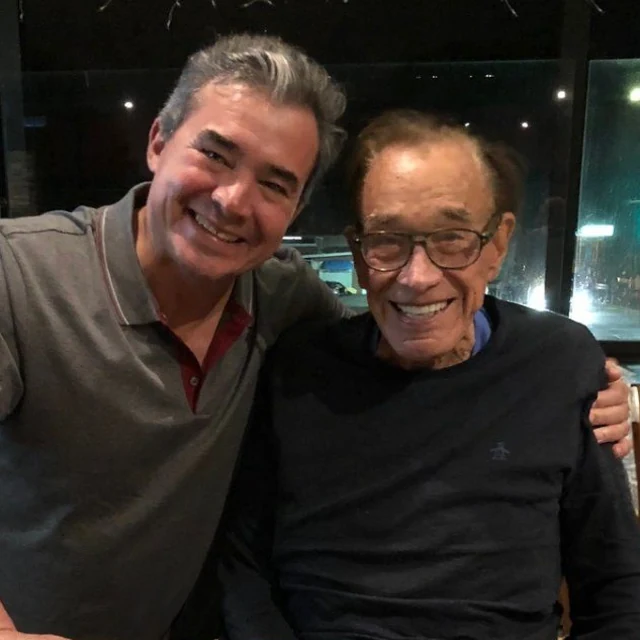
I trained in Mexico and the United States, including fellowship work with Bruce Connell in California, a master of the face and neck lift, and alongside the surgeons who shaped modern facial rejuvenation. The facelift became my signature. Over thirty-seven years I have performed more than three thousand.
A face does not age the way a diagram suggests. The scaffolding beneath gives way first, and the skin only follows. Reading that descent correctly, and reversing it without leaving any sign of the surgeon who did it, is the work of a career given to one operation. I am board certified in plastic and reconstructive surgery in Mexico, certification number 293, since 1984 and current through 2030. That certification came six years before the deep plane had a name. I have held a California physician and surgeon license since 1986. I am a member of The Aesthetic Society, the ASPS, and the ISAPS, and a lifetime member of the AMCPER. I founded two surgical clinics in Tijuana, CosMed in 1989 and VIDA Wellness & Beauty in 2013, and through both, the facelift has remained the center of my own work. I have never wanted to be known for anything else.
III · Judgment
Not every face needs a deep plane facelift, and not everyone who asks for one is a candidate for it. Some patients are better served by a smaller procedure, or by waiting, or by something else entirely. A few should not be having surgery at all right now, and I will say so.
I would rather lose a case than perform the wrong one. A face is the part of you the world reads first, and the trust involved in operating on it is not something I take lightly. If the deep plane is not the right answer for yours, you will hear it from me directly, in the first conversation, before anything is planned or scheduled.
When I may tell you to wait

IV · For Patients Abroad
Most patients who travel to Tijuana ask the same two questions: is this safe, and what happens after I go home. Those are not answered with reassurance. They are answered with accreditation, anesthesia, medical screening, recovery planning, and follow-up that continues after you return to the United States.
Two conversations with Delores, before her surgery and after. She traveled from the United States for a deep plane face and neck lift, and talks through the whole of it: the coordinator who arranged the crossing, the time with Dr. Quiroz, the facility, and the recovery. Not only the operation.
I do the evaluation, I write the surgical plan, and I perform the operation. Your case is not passed through an assembly line.
VIDA Wellness & Beauty, in Zona Rio, was the first facility in Mexico to earn Quad A (formerly AAAASF) accreditation. It is licensed by COFEPRIS and sits 15 minutes from the border, meeting an American standard that covers safety, sanitation, equipment, and emergency protocols.
Every procedure begins with medical screening. Dra. Nadiezhda Garcia Bonilla, board certified (CNCA, CONACEM), plans your anesthesia and is present for every case, monitoring you throughout the operation.
A free shuttle runs from 4 San Diego pickup points, Monday to Saturday, and a companion is welcome; if you drive, you receive a Medical Fast Pass for the return. Recovery is on-site at VIDA Wellness & Beauty's Recovery Boutique, with 24-hour nursing, chef-prepared meals, WiFi, and free international calls. A single bilingual point of contact stays with you on both sides of the border.
A remote conversation first. Nothing is scheduled until you have seen the plan, the quote, and the timeline.
Aftercare
A facelift does not end when you cross the border. Swelling, scars, sensation, and final shape keep changing for months.
A line to the follow-up physicians, day or night, for the questions and worries of recovery.
Call, text, or email, alongside your scheduled follow-up with Dr. Quiroz. A true emergency goes straight to the nearest ER, not a wait on us.
Written recovery instructions in English.
Scheduled remote follow-ups with Dr. Quiroz.
Red flag guidance before you leave Tijuana.
An English-language surgical summary, on request.
A clear line between what is handled remotely and what needs urgent local care.
V · The Method
That is the care around the operation. This is the operation. A deep plane facelift releases the facial structure beneath the muscle and repositions it as a single unit, instead of tightening the skin at the surface. The technique was described by Sam Hamra in 1990, building on the SMAS anatomy defined by Mitz and Peyronie in 1976.
You have seen the faces that make people afraid of this operation. So have I. Most of them are skin pulled tight to do a job that belongs to the structure beneath it. A well-performed SMAS facelift is the right operation for some patients. The deep plane is different. Instead of relying mainly on surface tension, it releases the deeper facial support and repositions it.
The deep plane goes further down. It releases the retaining ligaments that pin the fallen structure in place and moves the whole unit back, the way the face was built. The skin is never under tension. It is carried back to where it belongs.
The difference is not subtlety for its own sake. A repositioned structure holds. A stretched surface relaxes, and the years return faster.
How long it holds
The deeper layer is fibrous and tends to hold where it is set. Skin is elastic and drifts back. The result does not expire at a date. The face simply continues to age, from a better starting point. Figures reflect the technique literature, not a promise. Individual results vary.
| Aspect | SMAS facelift | Deep plane facelift |
|---|---|---|
| Main layer | Skin and SMAS, near the surface | Deeper facial support, released and repositioned |
| Main goal | Tighten and support loosened tissue | Reposition descended structure |
| Often best for | Selected mild to moderate aging | Jowls, neck, and midface descent |
| Key caveat | Can look tight if overdone | Requires advanced experience |
Social recovery near 14 days. Sutures removed on day 7. Longevity figures reflect technique literature; individual recovery and results vary.
VI · The Work
A face ages as one structure, not feature by feature. When the eyelids, the brow, or the neck have descended along with the midface, I may plan them together, so the result can read as one rested face.
The structural center of the practice.
Eyelid surgery to restore openness without changing expression.
Repositioning the upper face when heaviness changes the eyes.
VII · The Path
Whatever combination your face may need, the path is the same. It begins at home, with a conversation, and it ends at home, with follow-up.
Before you travel Remote, from home
A remote consult. Your goals, your history, and an honest read on whether this is the right operation for you.
Standardized images from every angle. The face is studied before anything is planned.
A surgical plan, an itemized quote, a recovery timeline, and a travel recommendation, presented before you commit.
In Tijuana At VIDA Wellness & Beauty
Dates, transfers from San Diego, and recovery lodging arranged around the surgery.
The operation itself, by the surgeon you already know.
The first days close to the team, before you travel home.
Back home In the United States
The aftercare described above continues once you are back in the United States.
Common questions
If your question is not here, ask it directly. I answer by phone, text, iMessage, or email.
Ask Dr. QuirozA deep plane facelift releases the structure beneath the facial muscle and repositions it as one unit, instead of tightening skin at the surface. Because the skin is never pulled, the result looks rested rather than operated on.
A SMAS or skin facelift tightens the surface and the layer just beneath it. The deep plane works lower, releasing and repositioning the facial unit as one piece, so the skin carries no tension.
Because structure is repositioned rather than skin tightened, deep plane results tend to hold longer than a conventional lift, commonly 10 to 12 years. A surface lift more often relaxes within 5 to 10.
The deeper structure is repositioned and the skin settles over it without tension, so the face is not pulled tight. The goal is a rested version of your own face, not a different one. Individual results vary.
Sutures are removed on day 7, and social recovery is near 14 days for most patients. Swelling continues to settle over the following months. Individual recovery varies.
Candidacy depends on your facial structure, aging pattern, and goals, not age alone. The first step is a remote consult with an honest read on whether the deep plane is right for you. If it is not, I will tell you.
I perform the surgery myself, at VIDA Wellness & Beauty, the first Quad A (AAAASF) accredited facility in Mexico, with a board-certified anesthesiologist. Most of my patients travel from the United States, and care is coordinated on both sides of the border.
Coordination runs from San Diego: border transfers, recovery lodging with medical access, and a companion accommodated. A single bilingual point of contact stays with you, and follow-up continues after you return home.
Most patients plan to stay close to the surgical team through the first checkpoints, including suture removal around day 7. The exact timeline depends on the procedure and your recovery plan.
A deep plane face and neck lift with Dr. Quiroz commonly runs $11,000 to $13,000 all-in: surgery, operating room, anesthesia, pre-op labs and EKG, hospital nights before and after surgery, medication, and round-trip border transport. The US average facelift is about $20,000 and a US deep plane about $25,700 (RealSelf). The exact figure depends on whether the eyelids, brow, or fat grafting are added, and on your recovery and travel needs. You receive a detailed, itemized quote after a photo review and consultation, so the figure is yours before anything is scheduled.
I am board certified in plastic and reconstructive surgery in Mexico (CMCPER No. 293, since 1984, recertified through 2030), licensed as a Physician and Surgeon in California since 1986 (Medical Board of California, license A 42463), and fellowship-trained under Bruce F. Connell in California. I am a lifetime member of the AMCPER and a member of The Aesthetic Society for over 25 years. The facelift has been the center of my work for 37 years, with more than 3,000 performed.
I am board certified in plastic and reconstructive surgery in Mexico (CMCPER No. 293, since 1984), and I have held an active California physician and surgeon license since 1986 (Medical Board of California, No. A 42463). I am a member of The Aesthetic Society, the ASPS, and the ISAPS. American Board of Plastic Surgery certification is a separate United States credential and should not be assumed.
You are not handed off. A 24/7 line, by call, text, or email, reaches the follow-up physicians for the ordinary questions of recovery: pain, drains, bruising, what is normal and what is not. Plus scheduled remote follow-ups with Dr. Quiroz through the months that matter most. A true emergency goes straight to the nearest emergency room, not a wait on us: any US emergency room must screen and stabilize you under federal law.
VIII · Begin
A face is not something you order from a menu. It is a structure to be understood first. The next step is a remote consultation, with no obligation, to decide together whether this is the right approach for yours. If it is, the goal stays what it has been for thirty-seven years: your own face, rested.
Telephone
Text or iMessage
Clinic
Calle Brasilia No. 1, Fracc. El Paraíso, Tijuana
Patients from
United States